
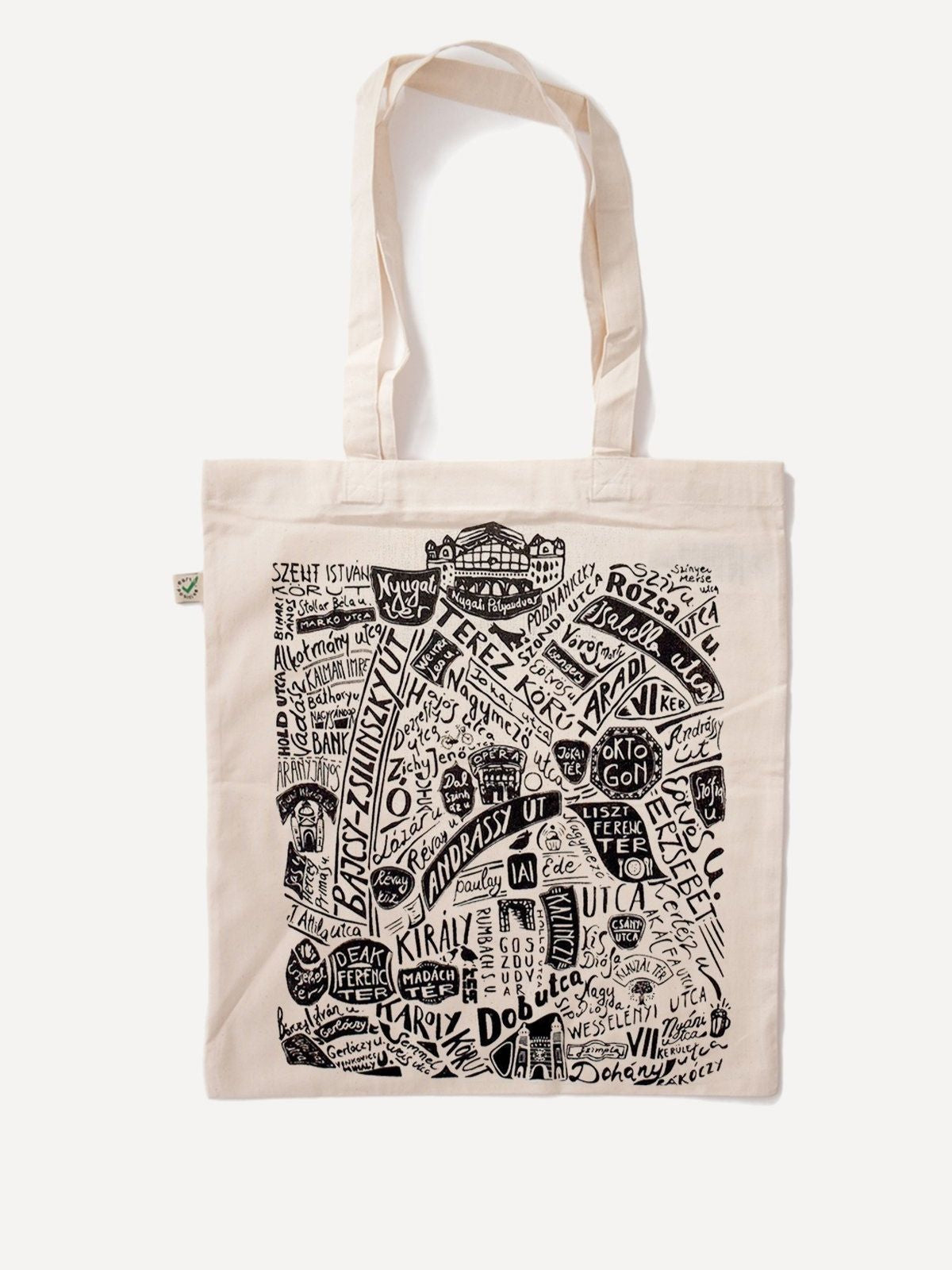
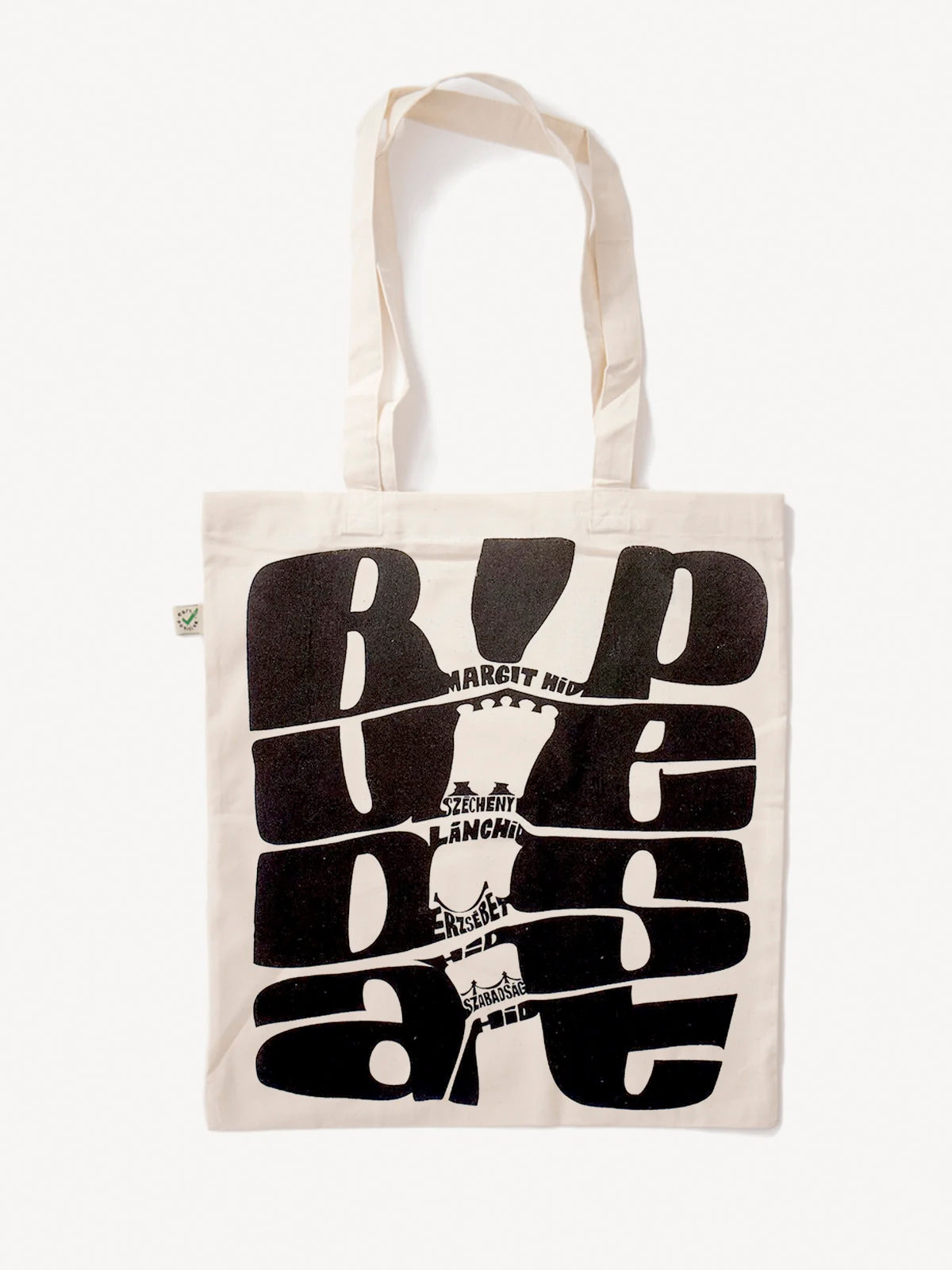

Sári Szántó and Dasha Sz have been living together for fourteen years. Their daily lives are interwoven with creation: they share ideas, exchange sketchbooks, and sometimes even work on the same canvas. This continuous dialogue not only shapes their shared vision but also naturally develops the visual language that is evident in the City Romance exhibition.
Opening speech by design theorist Kitti Mayer

The last time I opened an exhibition here was at the end of May, "A Little Budapest: The City In Souvenirs," but that wasn't my last visit to Printa – thanks for letting me come back. Moreover, I had the privilege of writing an overture, with my modest means, to the jointly composed, illustrative urban symphony of Sári and Dasha, a creative duo dear to my heart. So, thank you for having me here again. This is always a rewarding task. I love coming here, truly (and I see I'm not alone in this).

Something new and exciting is always happening here, making it worthwhile to return. This space always shows a different face depending on the temporary resident artists, who season the space to their liking with their own raw materials and recipes. For example, last time, the distinctive visual world of a Belgrade graphic studio and a streetwear brand came to life on the walls, and before that, we could marvel at the geometry of everyday life, the peculiar (and regular or playful) pattern system of urban space. The capital-C City is a good subject, good raw material, good object. Exciting, multifaceted, mysterious, deceptive. Sometimes it surprises us. If we let it. In the Printa edition gallery space, in these few square meters, we can discover many faces of the city and many faces of cities. And so it is now.

This time, our destination is the Armenian capital, where Sári and Dasha guide us. Yerevan was never among my desired destinations, I know absolutely nothing about it (really). But if it’s as Sári and Dasha see it, I'm already checking flight tickets. No, obviously Yerevan isn't like this. Or is it? Yerevan can be like this – so colorful, exciting, chaotic, fairytale-like – because there are two people who see it this way, capture it this way – and in this form, their interpretation is very true and valid. Moreover, the uniqueness of this unusual city tour lies in the fact that our guides – instead of an umbrella held high – clutch colored pencils, crayons, and sketchbooks in their hands, and arm-in-arm accompany us from one sight to another. Their urban map is full of colors, shapes, layers, and emotions – I'm just saying: no navigation device, no matter how enhanced with satellite images for route planning and location finding, can do that! When an artist chooses an existing city as a subject, they also create their own city. And if they make this created city accessible to a wider audience, they also influence the recipient's relationship with the city, their image of the city. And how!

For me, for example, New York is black and white, period. It simply burned into my consciousness that way – I've watched Woody Allen's Manhattan so many times that "the big apple" in my reality can only gently awaken from its sleep to Gershwin's music, rumble, pulsate, quiet down, then again give way to loud noise.
And you know, I have absolutely no problem with this illusion; the celluloid preserved it for me this way. If for any reason, it's only for this reason that I wouldn't travel to New York: if I stood there, I would have to realize and accept that the hansom cabs, the crowds surging on wide streets, the taxis crawling in the snow, and the joggers in shorts even in winter only existed on the silver screen, and the elegant neon sign saying "Broadway" doesn't flash to the rhythm of Rhapsody in Blue.

Sári and Dasha's jointly composed urban experience is also quite extraordinary and captivating, even if they seemingly apply completely ordinary elements to the medium, whether it's canvas, hardboard, recycled banner, or a sheet of paper from a sketchbook. Let's admit, receiving this subjective illustrated report is much more enjoyable than what we are generally used to. After all, what usually happens? An acquaintance, a family member returns from a trip abroad, and tries to make the experience of the trip vivid for us with many, many, many photos pulled from their smartphone's memory. "I was here," "I saw this," "I tasted this." They tell us, illustrate with pictures (prove!) where they were, what they saw, and what they ate or drank. In contrast, Sári and Dasha not only tell us, with the (manual) tools of image creation, what they saw, but also how and what they saw it as, how they experienced the city. And if we never get to Yerevan, we can still be sure that that city is indeed inhabited by women posing with drawn swords (pardon, I mean fish) and graceful swans with muscular legs that put ballet dancers to shame. So, it can't be a bad place.

Finally: on behalf of all of us, thank you for creating and bringing to life Printa edition, the Printa gallery. For inviting artists into this space whose fine art works (be they photos, paintings, illustrations, graphics, or tangible objects) connect with the city, who are inspired by the peculiar and special atmosphere of the concrete jungle, and for giving back to the city together with them. After all, the screen prints and garments created during collaborations do not remain within the gallery walls but embark on new journeys, starting new lives in someone else's home (or perhaps their wardrobe). And thank you, Sári and Dasha, for not locking this colorful illustrated travelogue, your romantic urban novel, your picture book, in a drawer (as this is not your custom anyway), but for showing it to us now. And so perhaps we too will become a little more adept at not merely viewing the city we are newly discovering (or have been inhabiting out of habit for years) through the lens of our phone's camera, but allowing ourselves the luxury of slowing down at a sculpture by an unknown artist, losing ourselves in the sight of a fountain, a flowerbed, or a leafy tree. To dare to see the concrete jungle in color, even if it is most often (quite simply) gray.

Our City Romance exhibition can be viewed until December 1, 2025, on the walls of Printa edition. The T-shirt and screen prints created as part of the collaboration are available at this link.